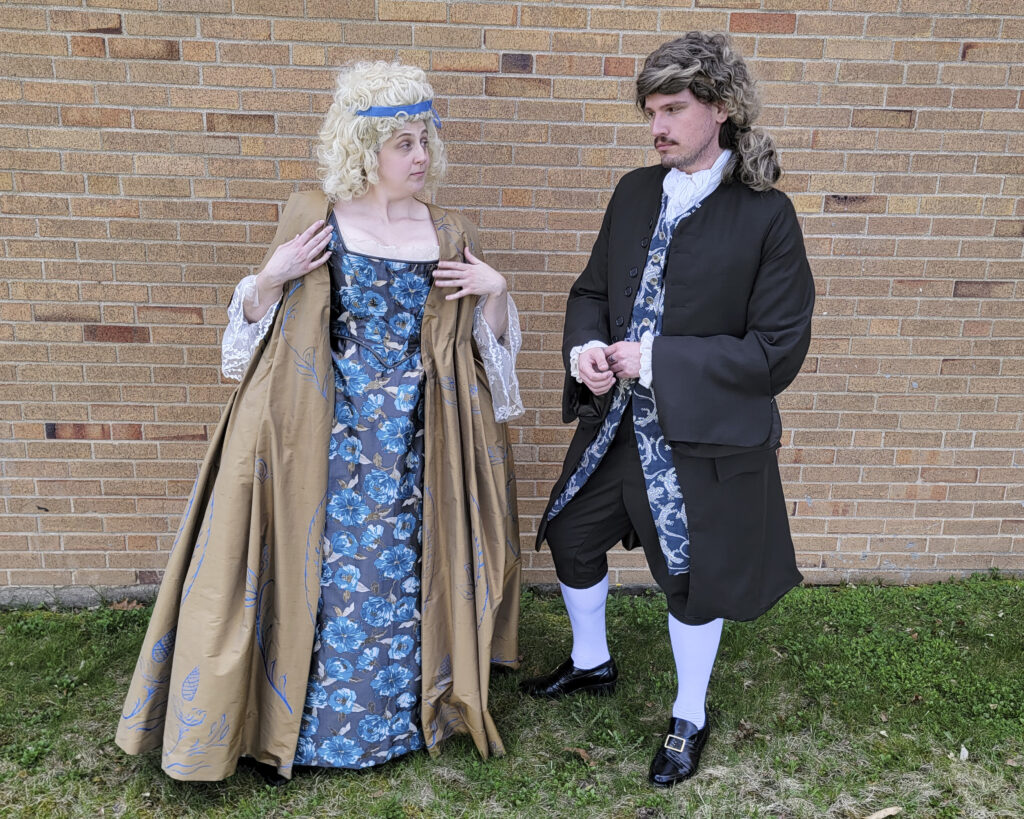
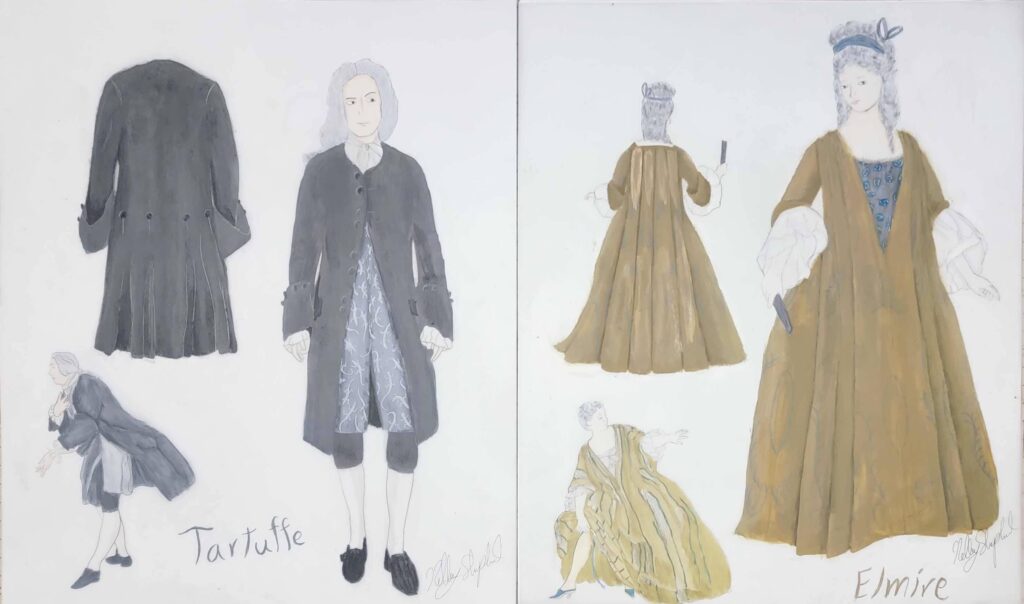
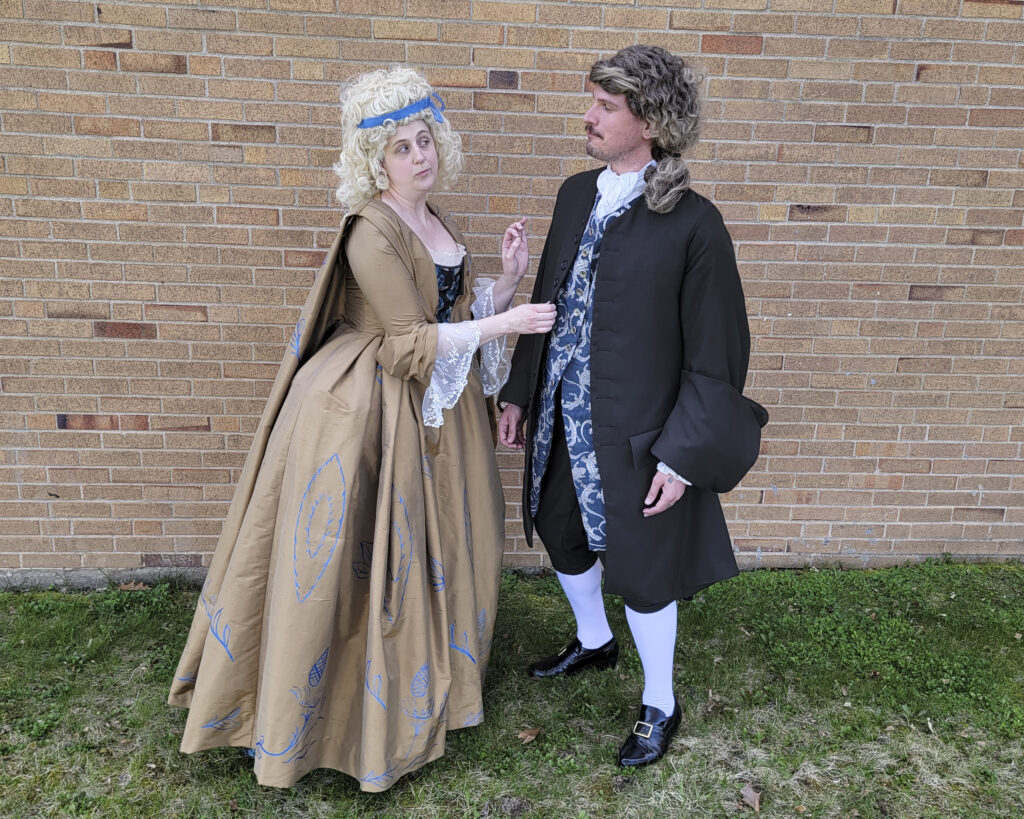
To design and build a suit for Tartuffe and a sacque-back gown for Elmire, as costumes for graduate actors to wear. Orgon and Madame Pernelle, the two characters Tartuffe puppeteered, would be designed as marionette puppets. Then, I would switch roles to Draper, and Puppet Fabricator to work from the rendered designs and research to create patterns, cut material, construct the costumes and puppets, and use finishing techniques to complete the pieces.
This page reflects the builds of Tartuffe and Elmire; there is a separate page on the marionettes.
Process
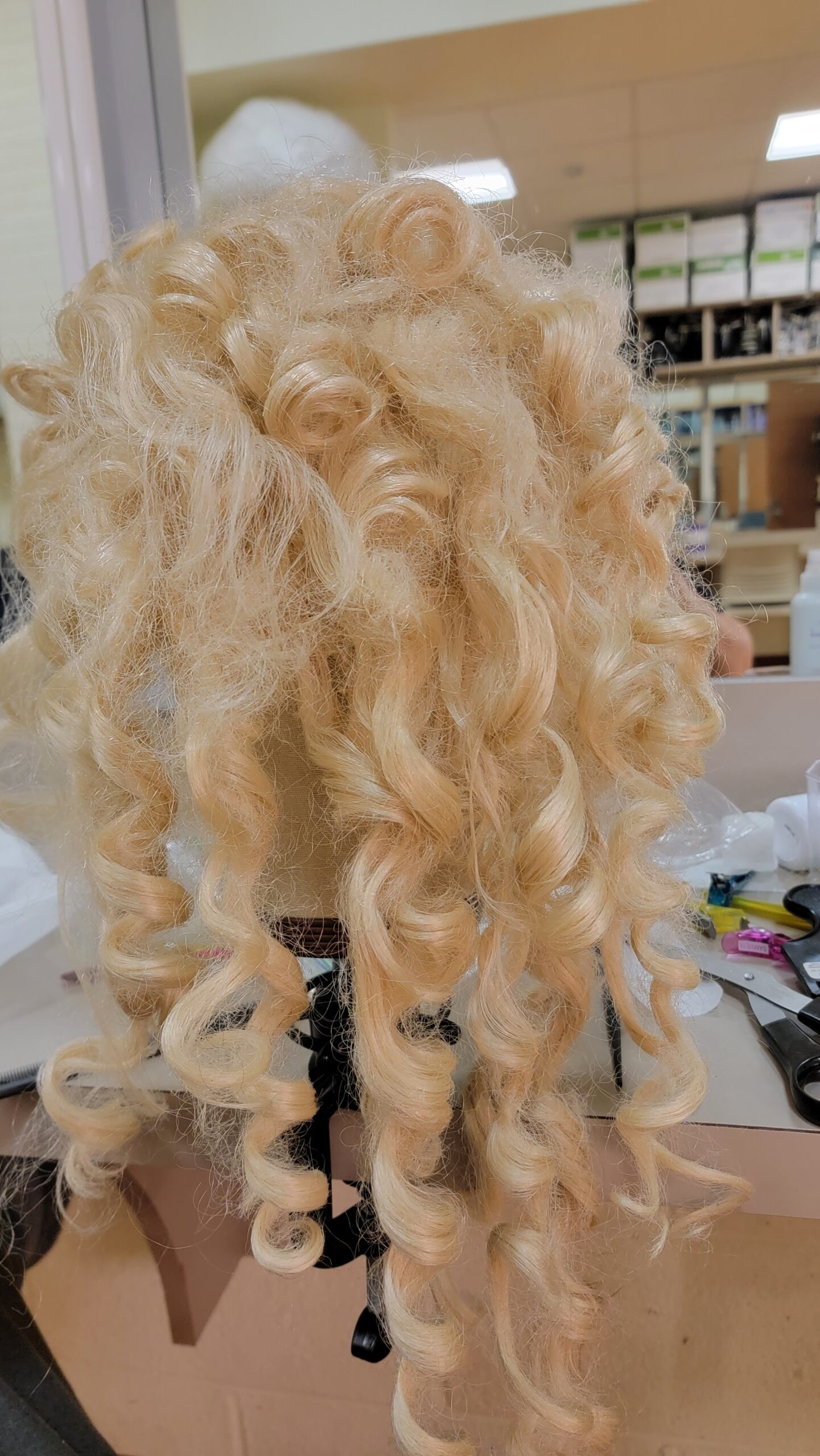
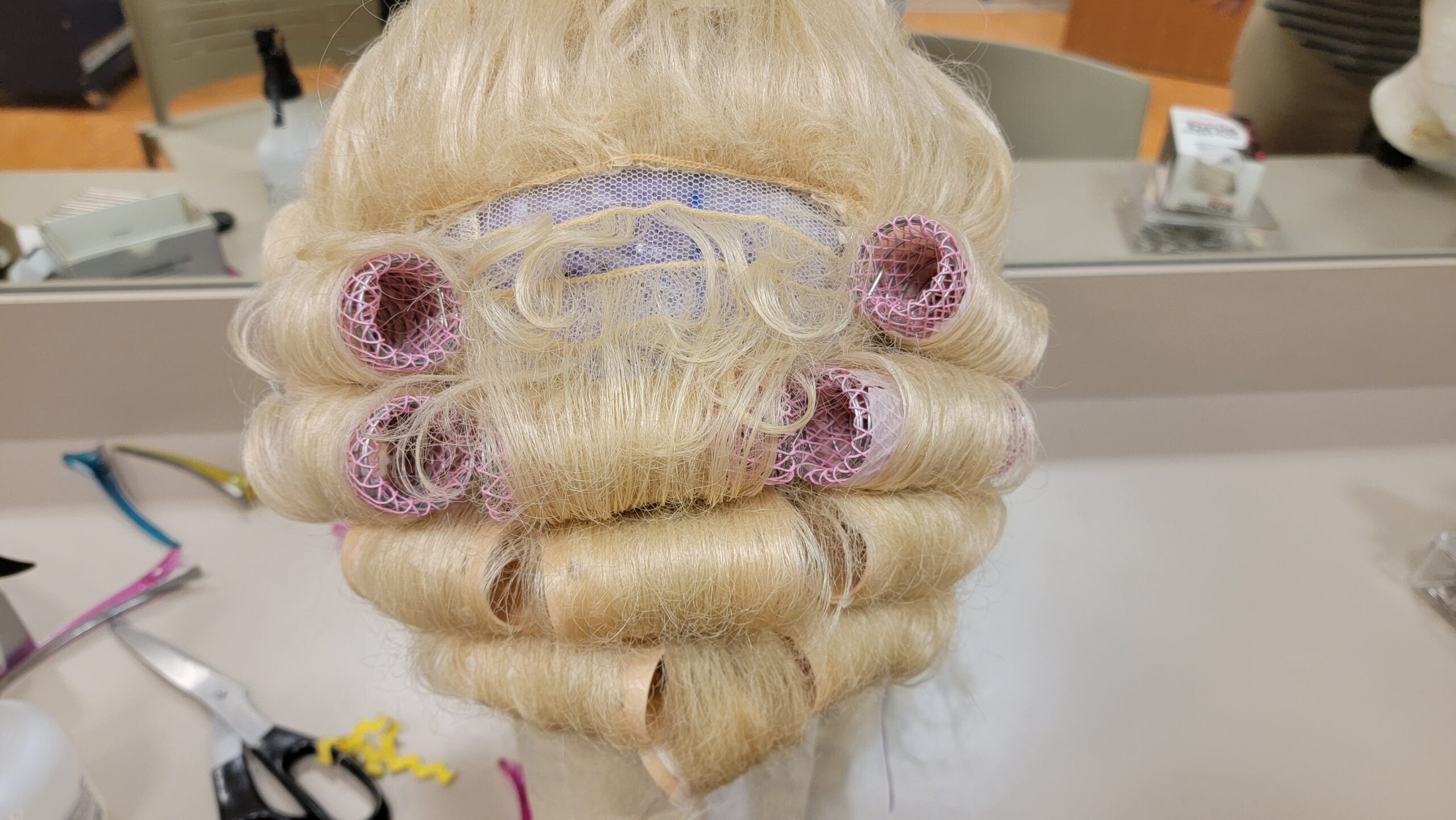
This project was a culmination of every technique I learned throughout my time in grad school. From dye techniques to embroidery, textile painting, draping, drafting, wig styling, and tailoring.
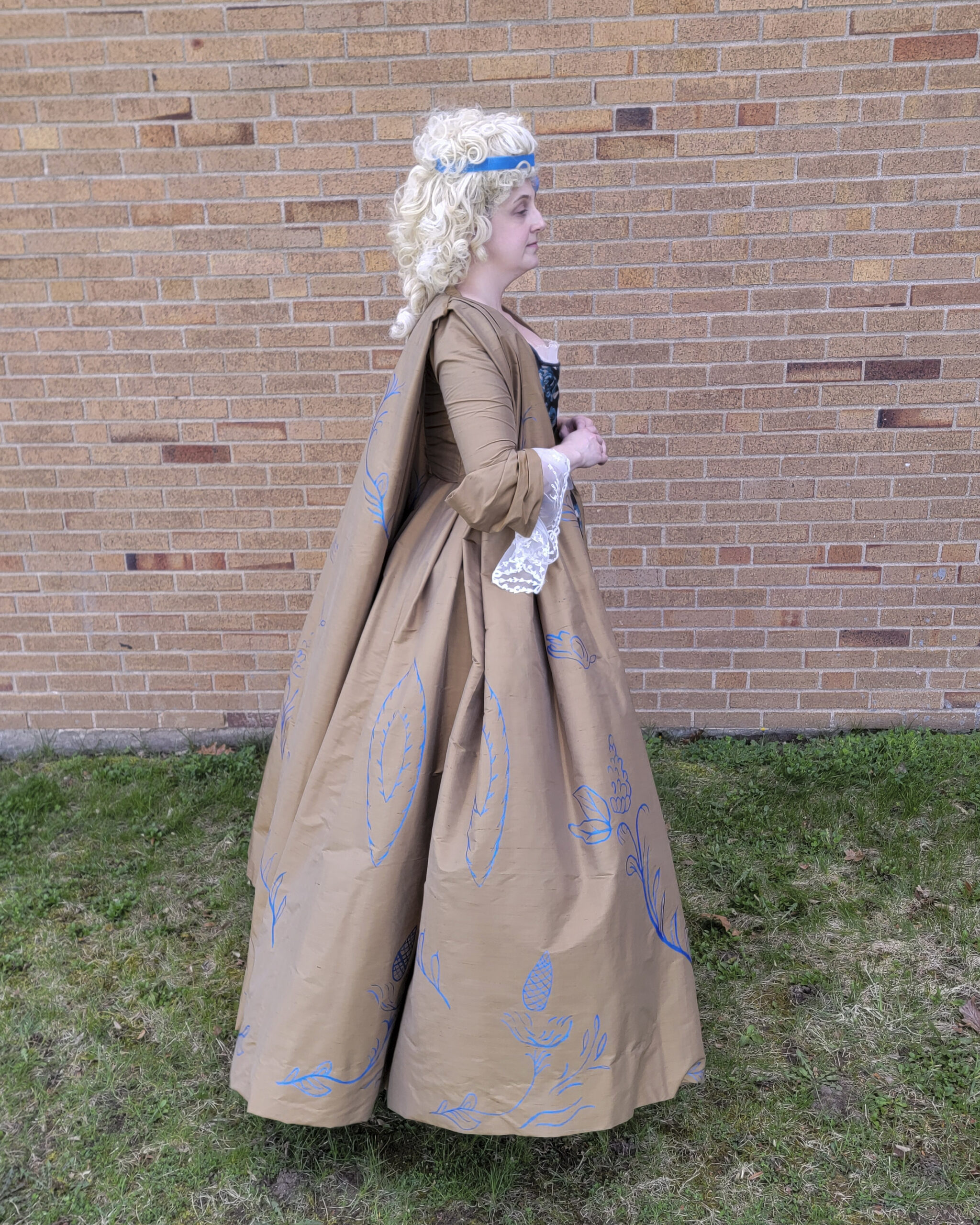
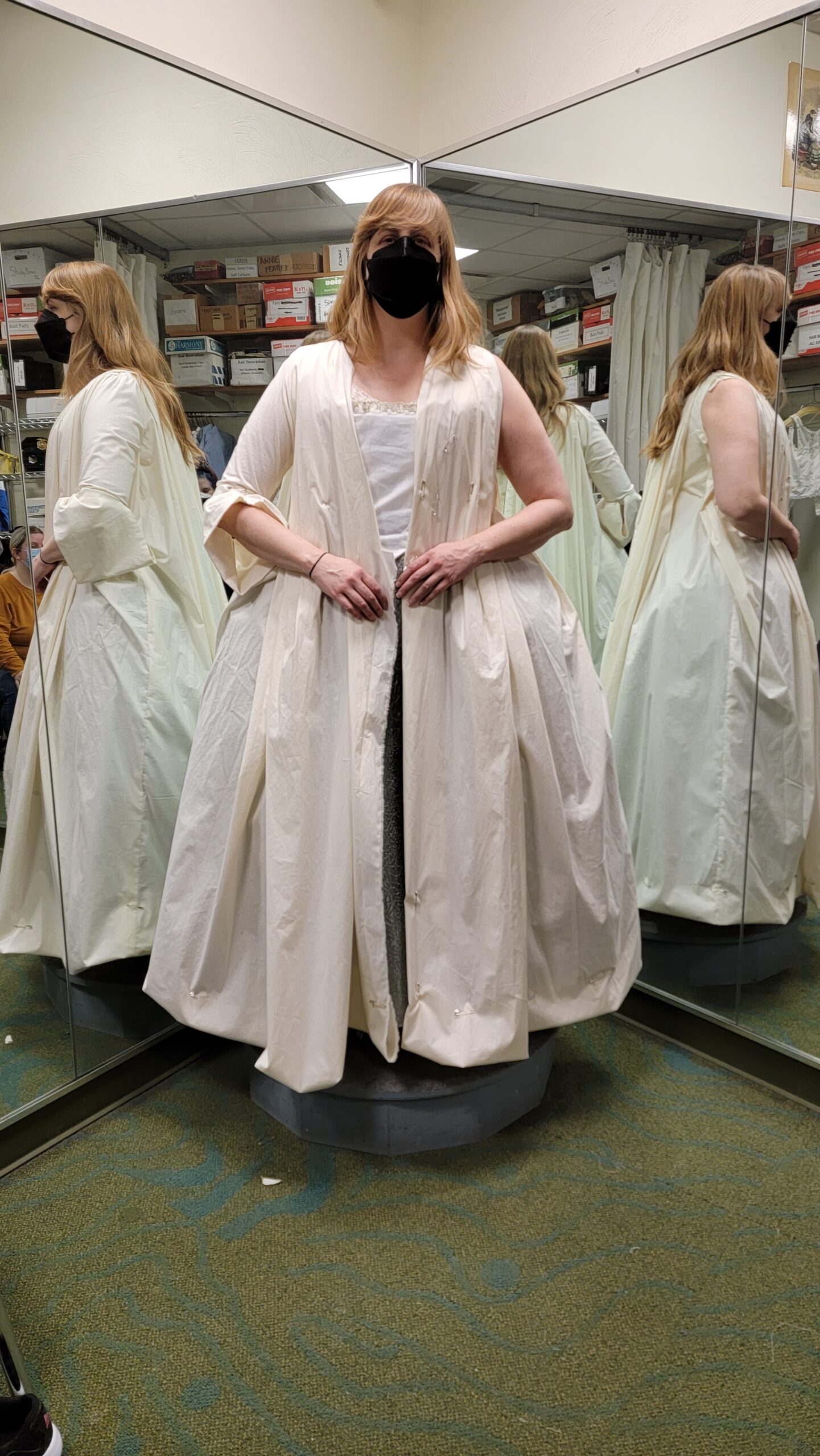
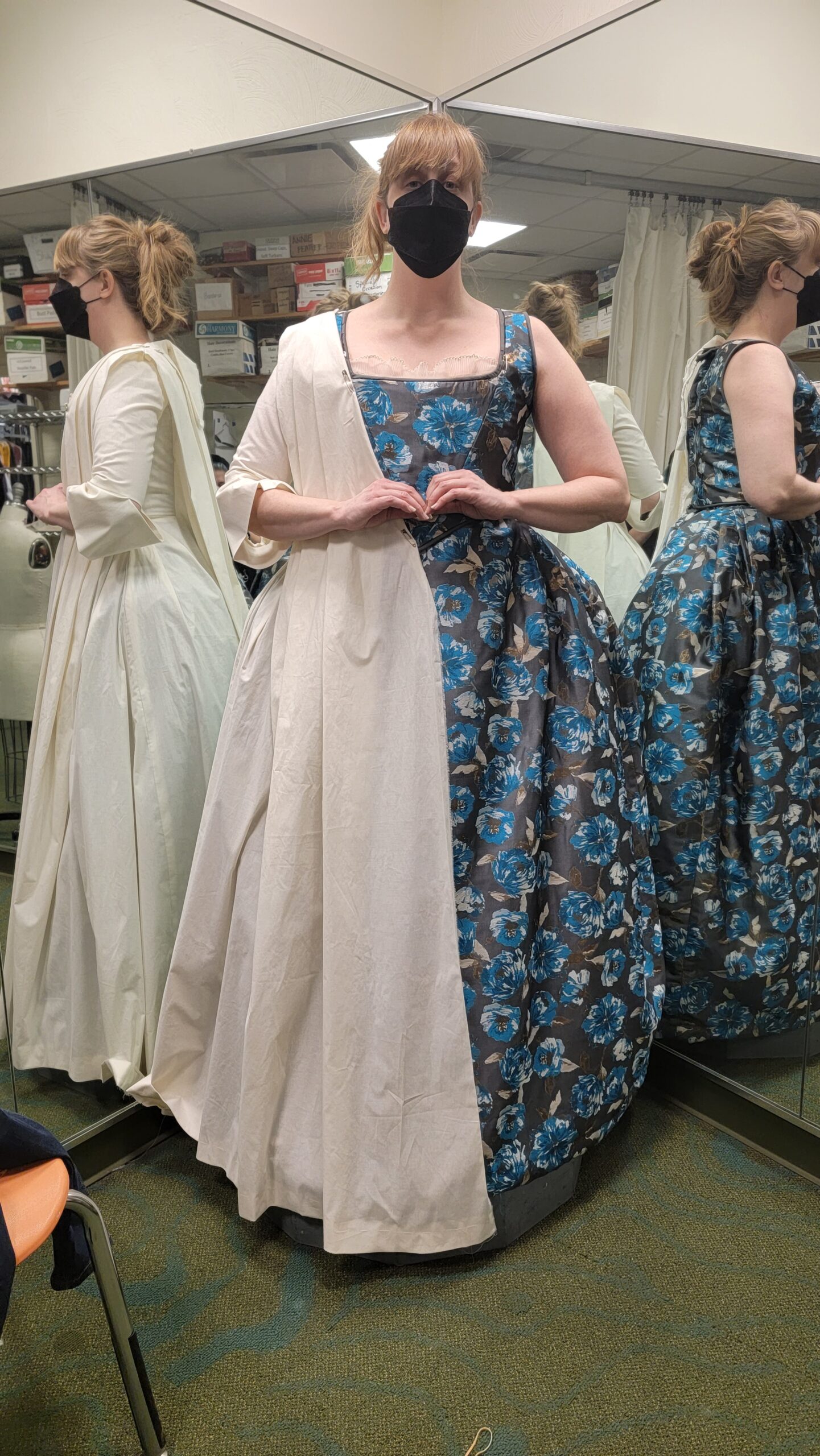
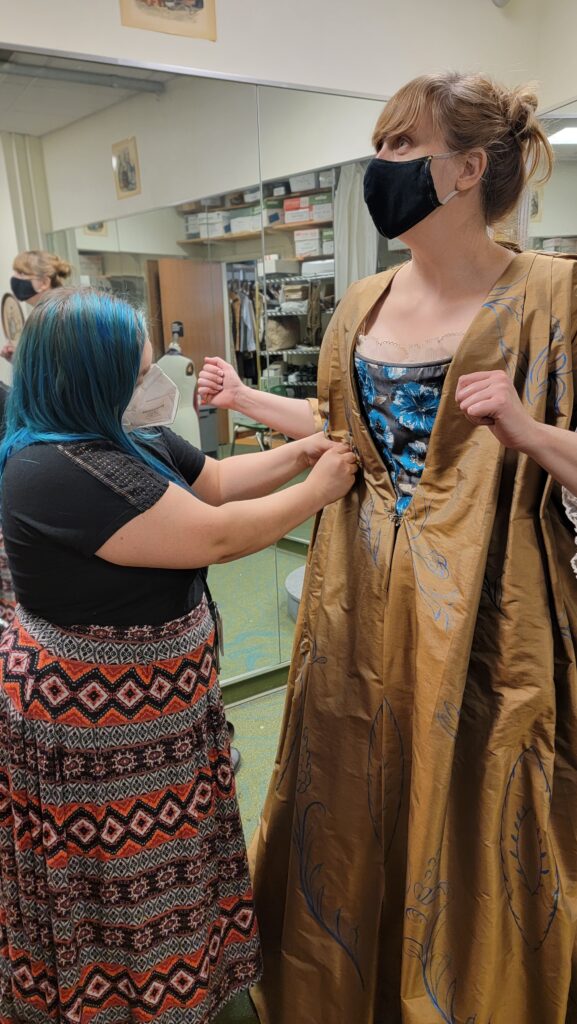
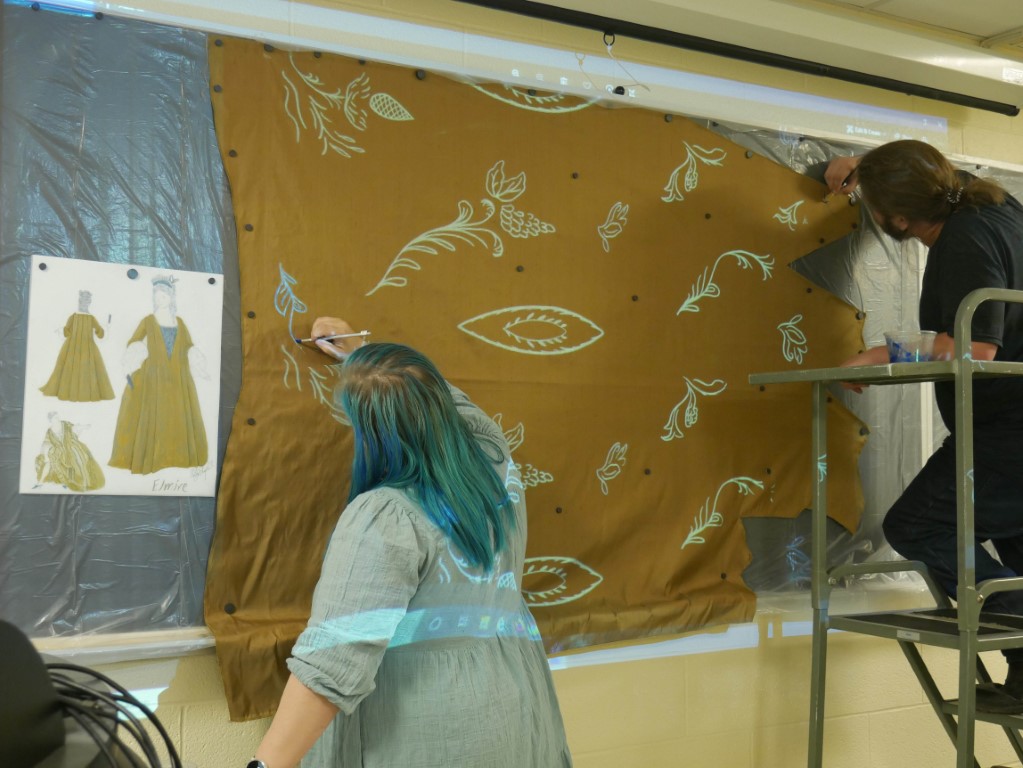
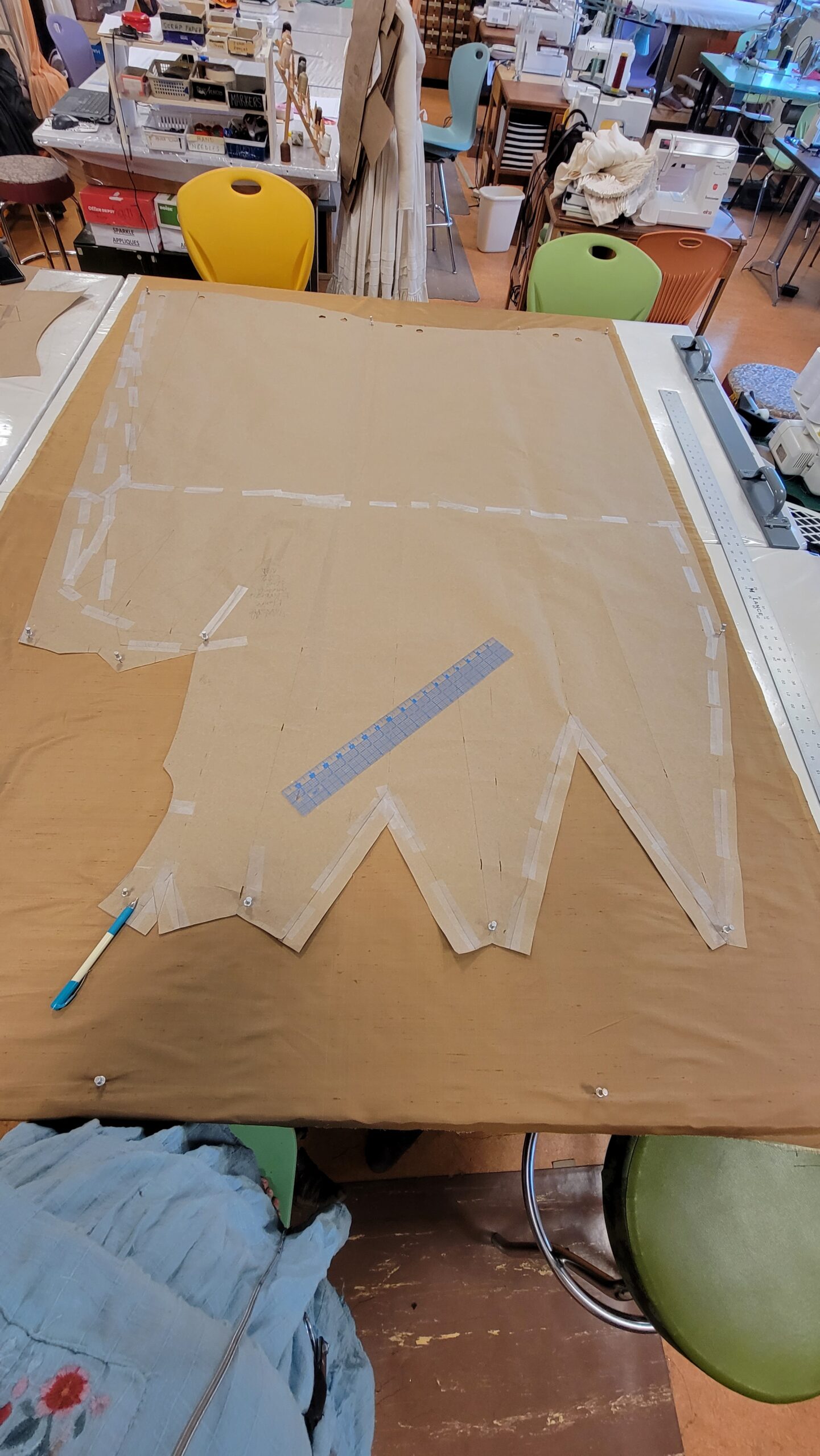
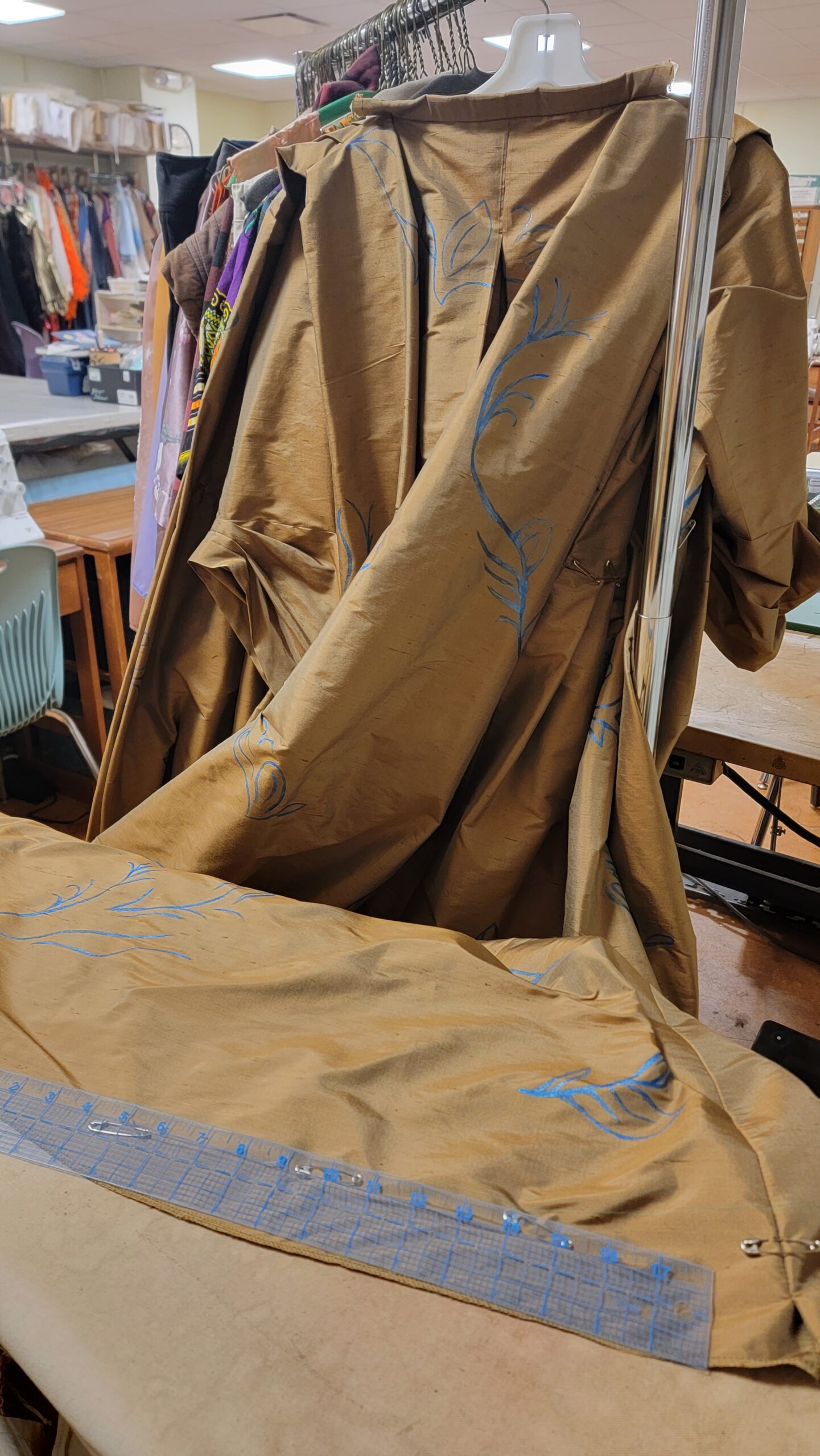
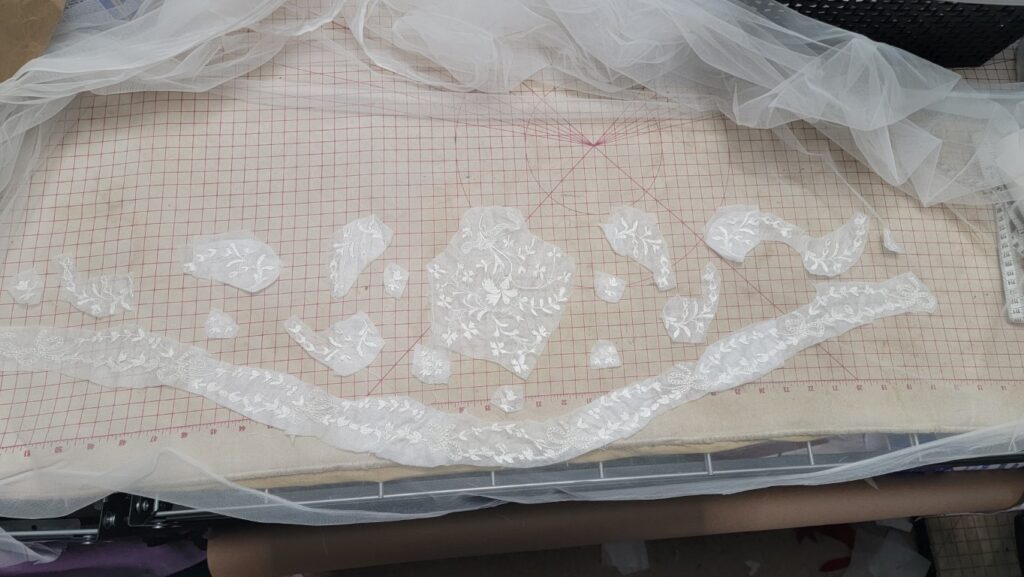
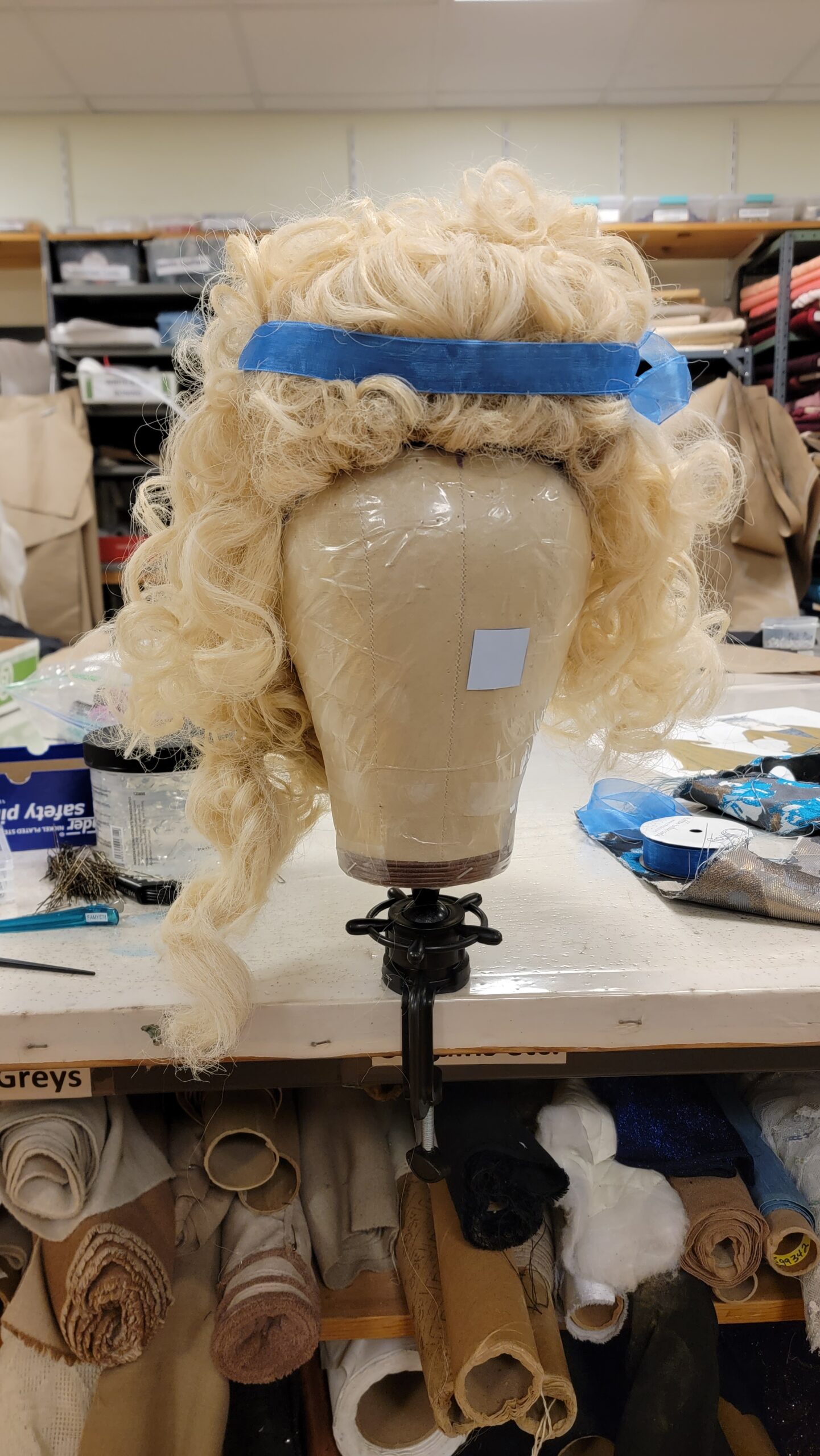
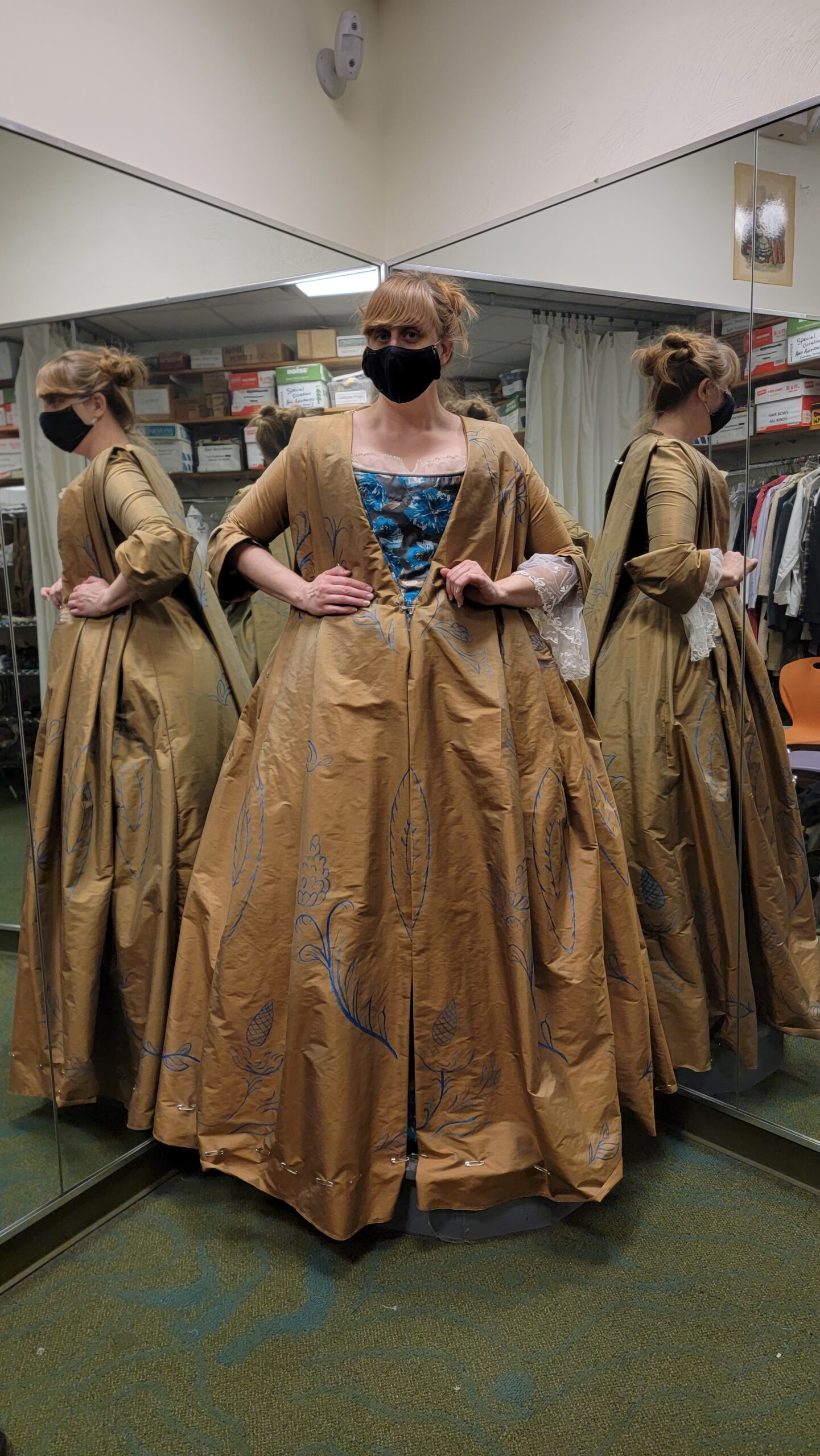
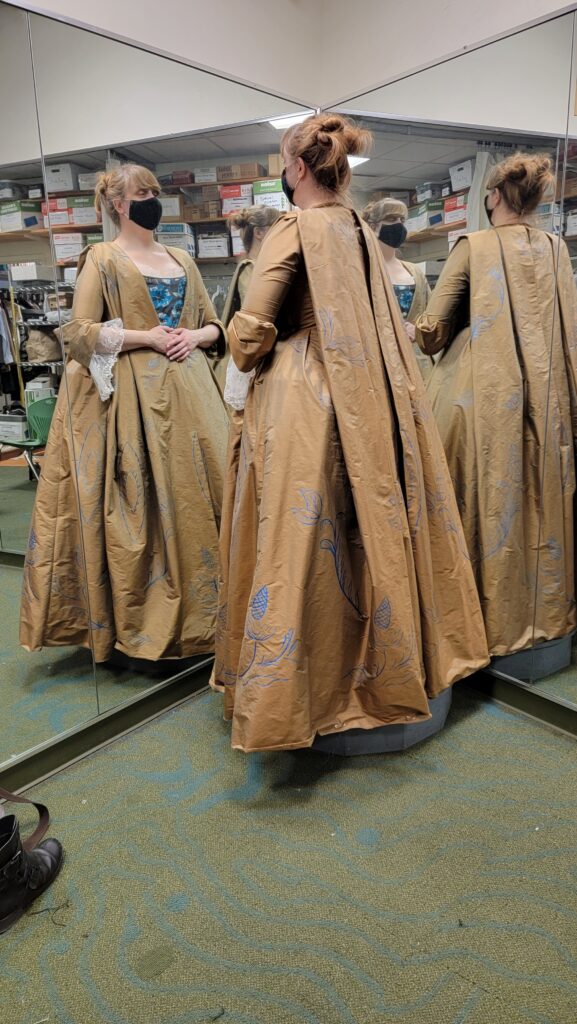
The design for Elmire was inspired by period paintings and informed by research that included a hands-on study of an extant robe à la française at the Kent State University Museum. The robe volante required a second draping, as I was not happy with the drape and silhouette of the first mockup fitting. The final pattern was confirmed with a robe volante pattern in Norah Waugh’s The Cut of Women’s Clothes. The gold silk taffeta was hand-painted with the help of a projector to transfer the pattern uniformly across all pattern pieces. The delicate, detailed lace sleeves called engageants were created thanks to a digitized historical embroidery design, which was then embroidered onto bridal tulle supported by water-soluble stabilizer.
Painting Gown
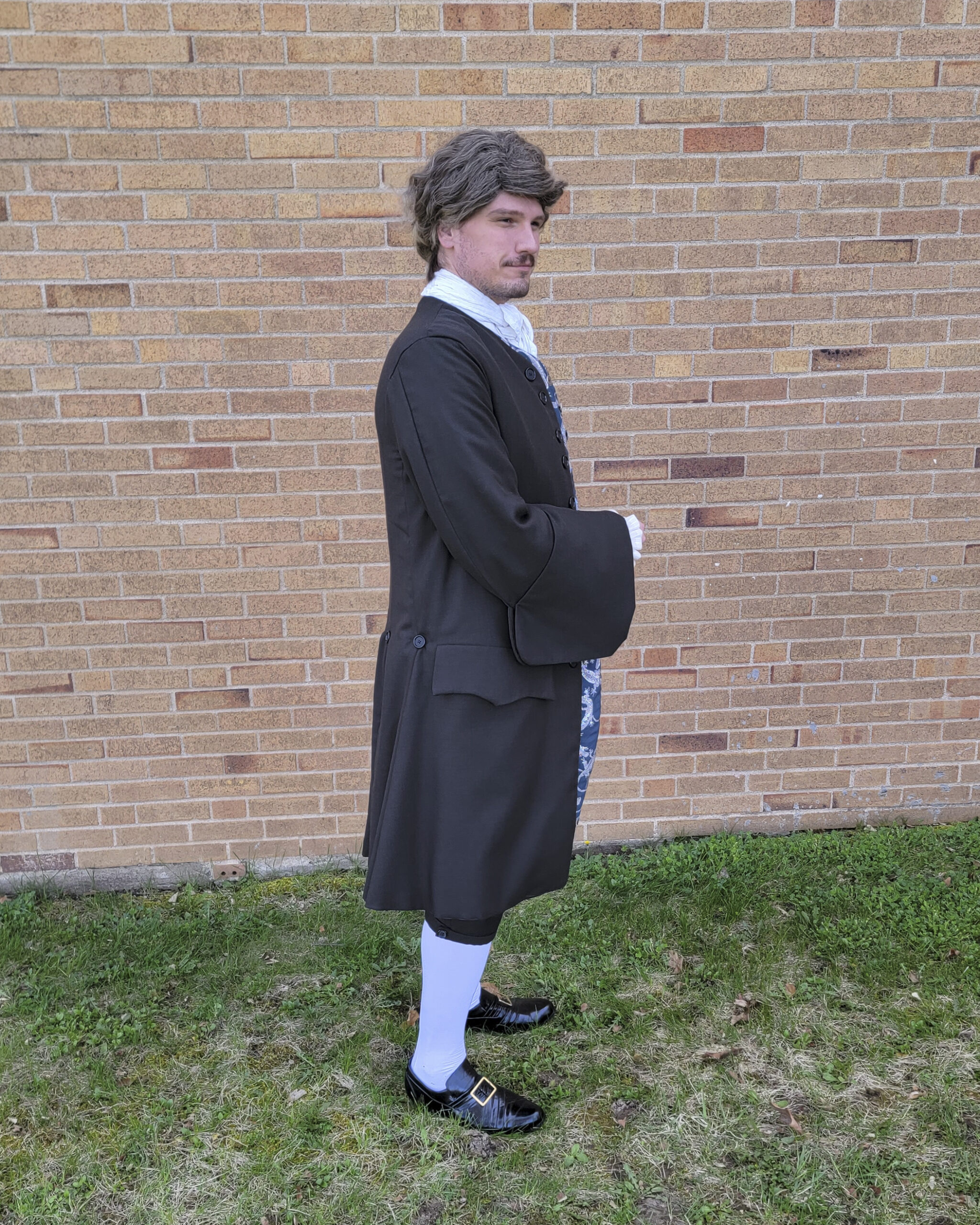
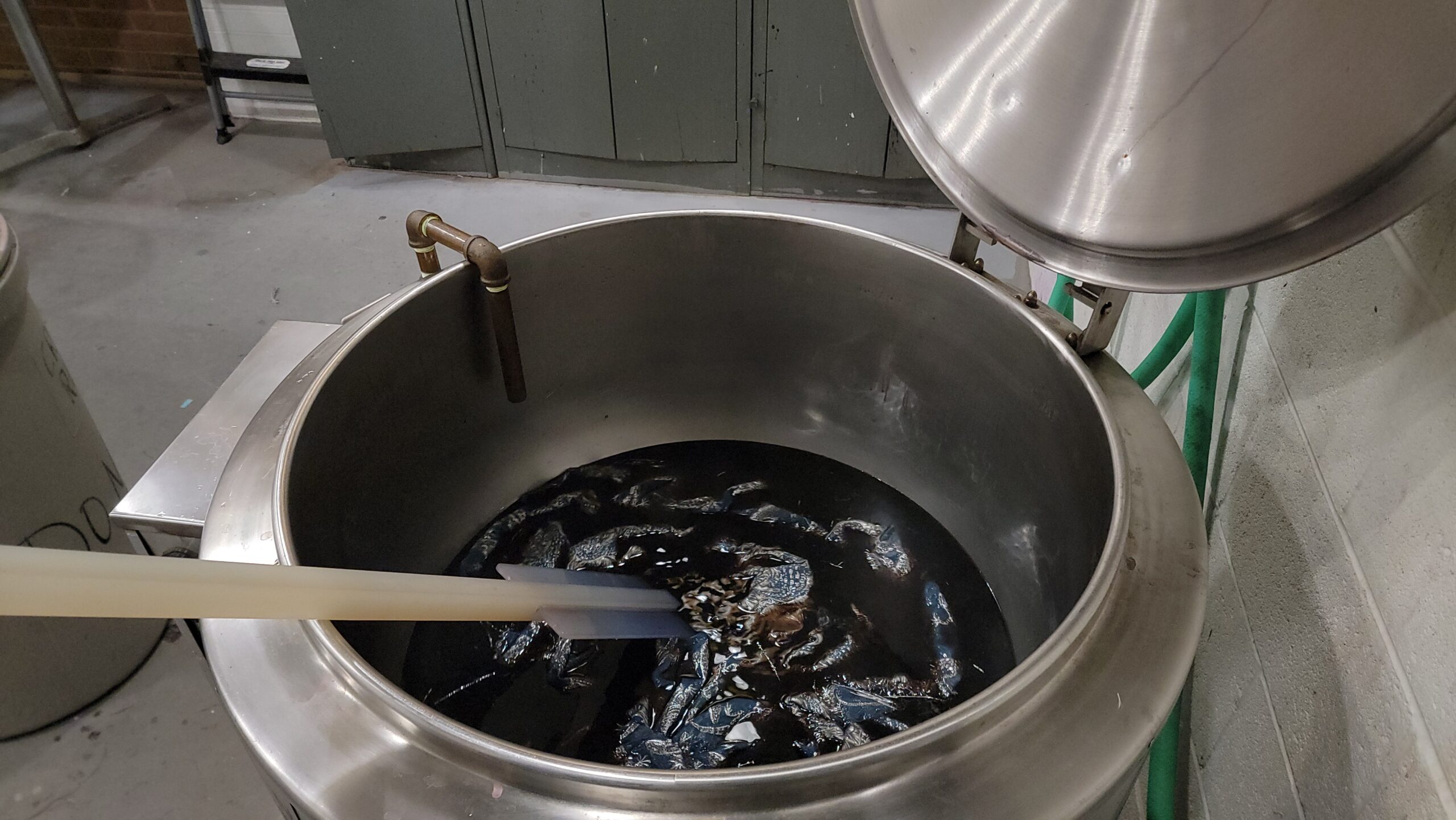
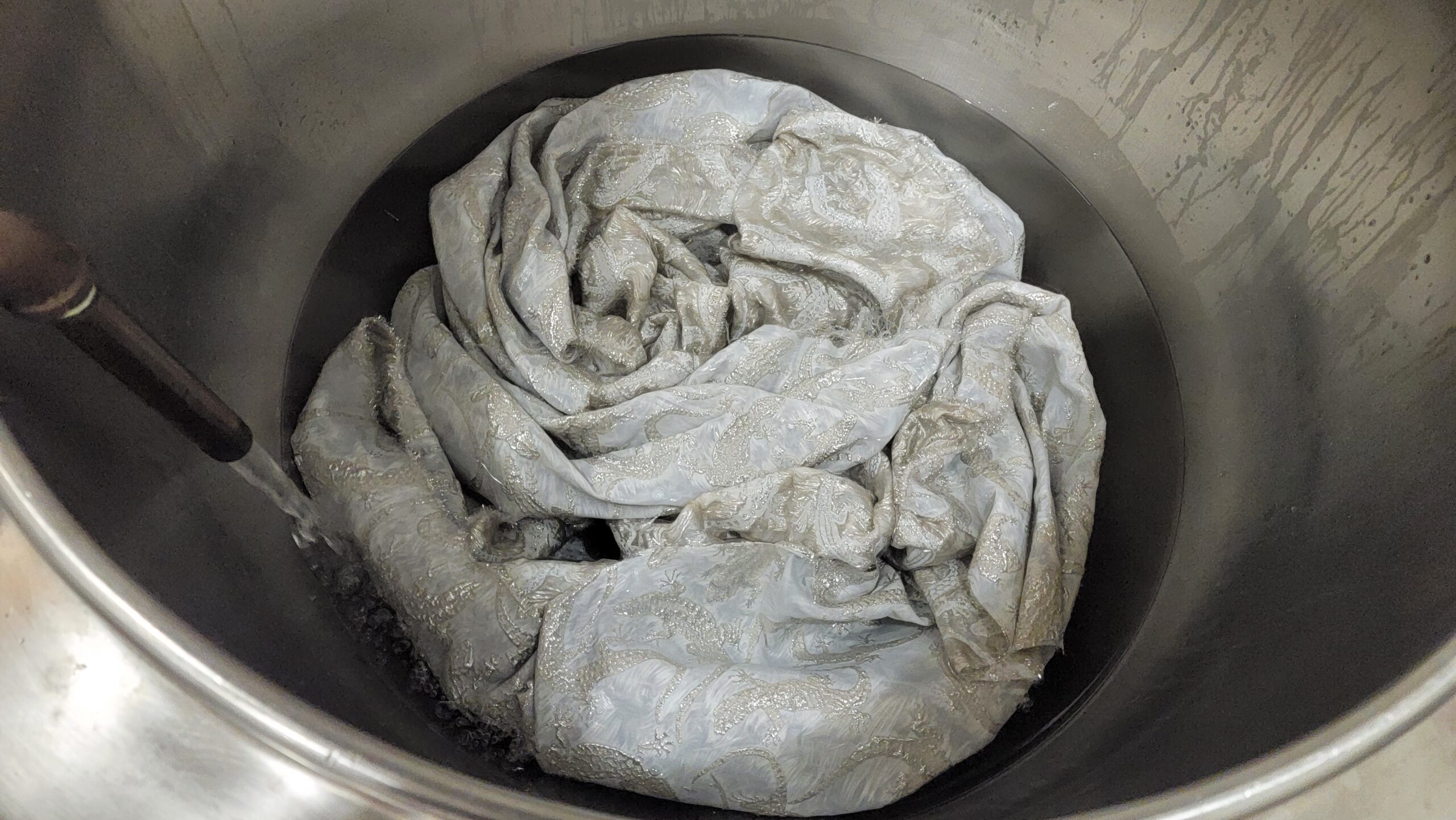
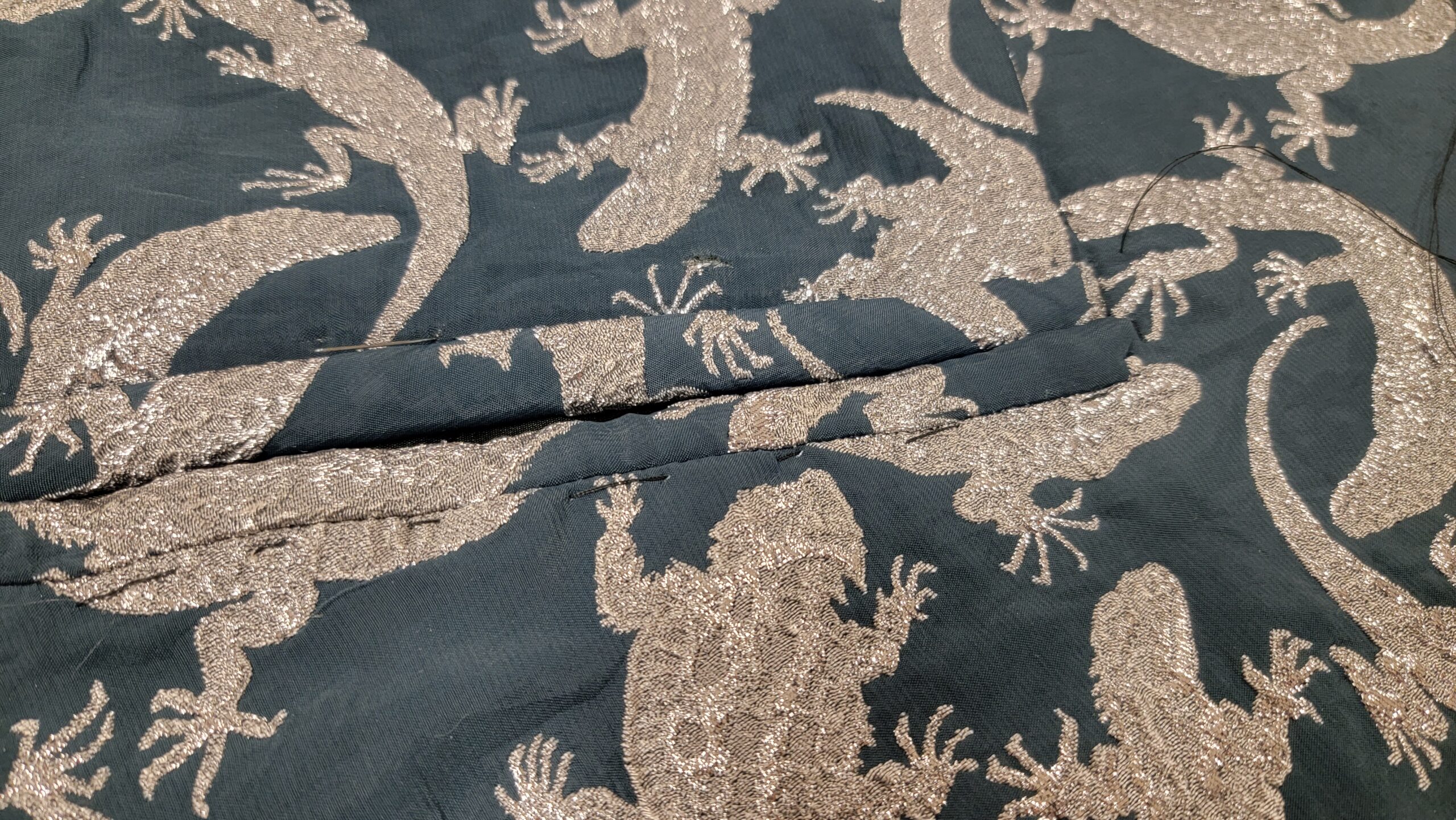
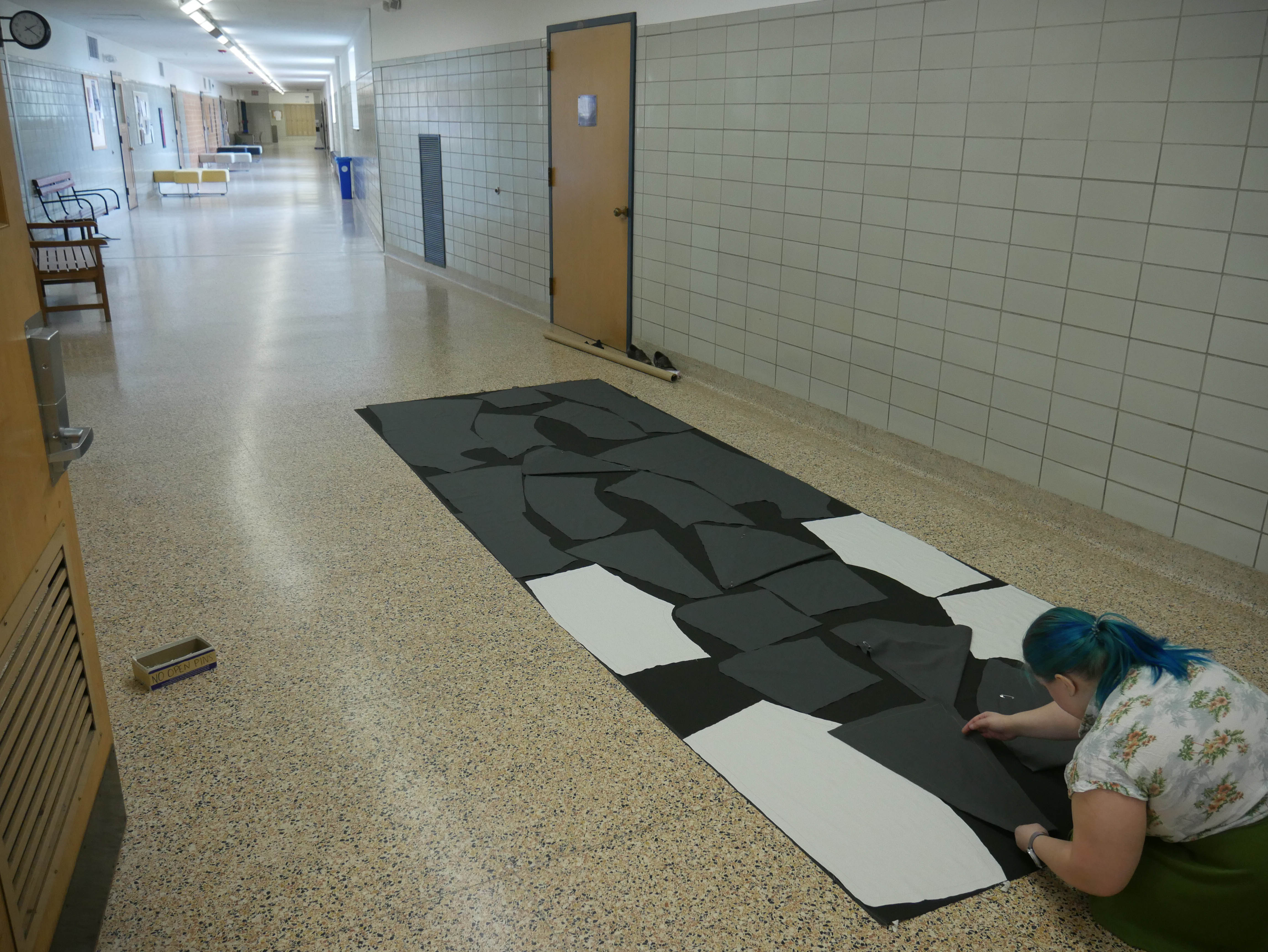
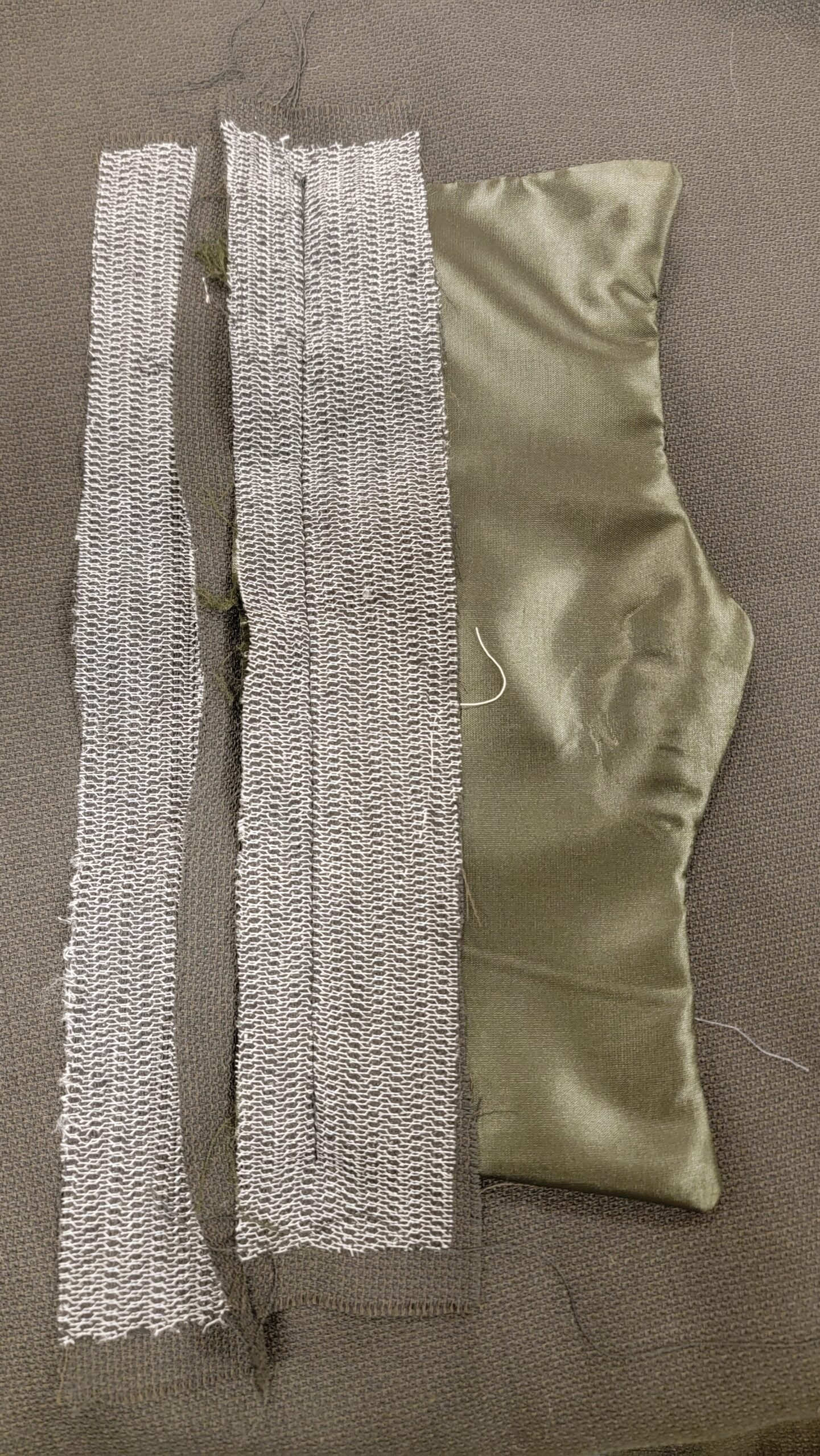
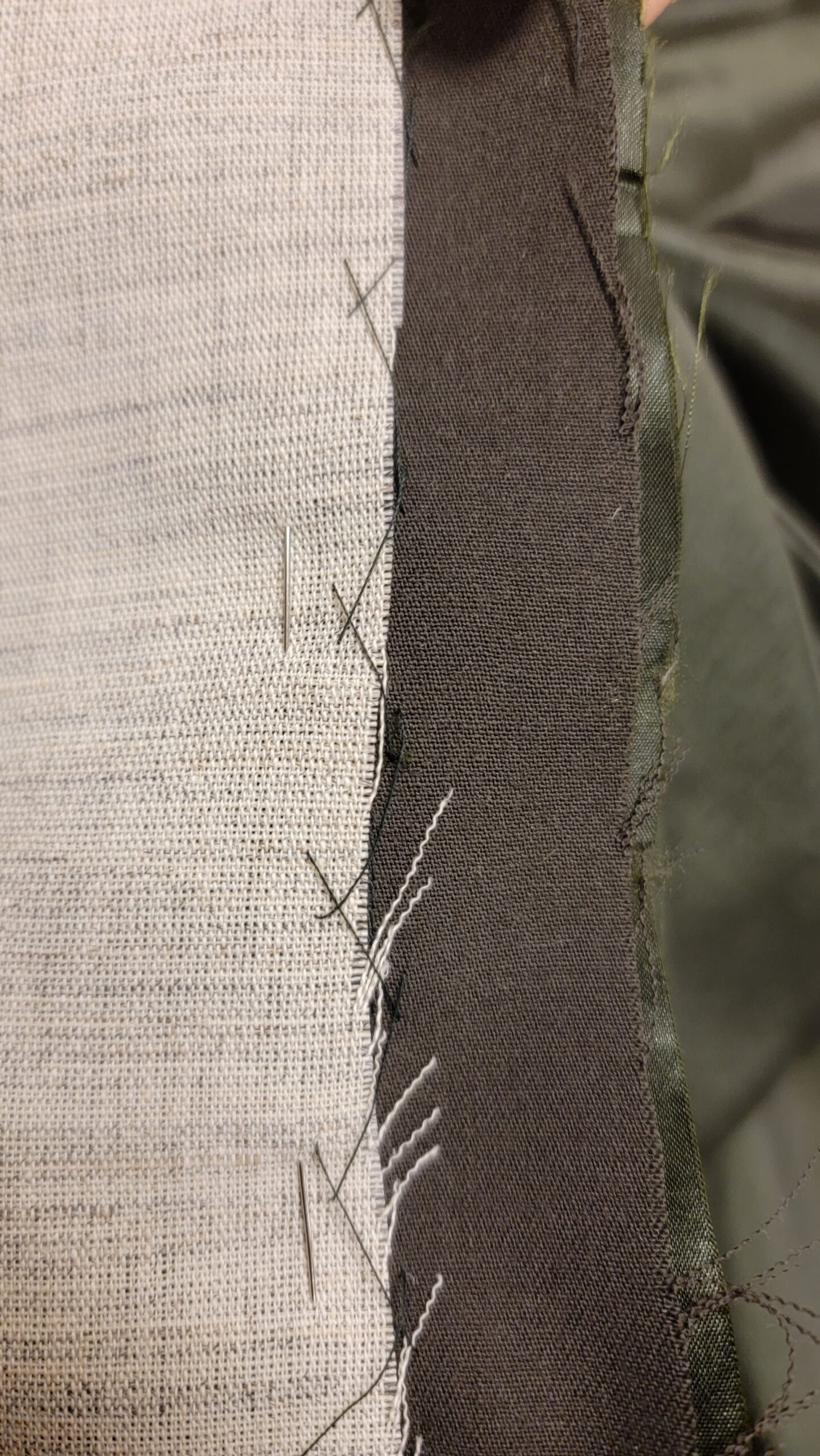
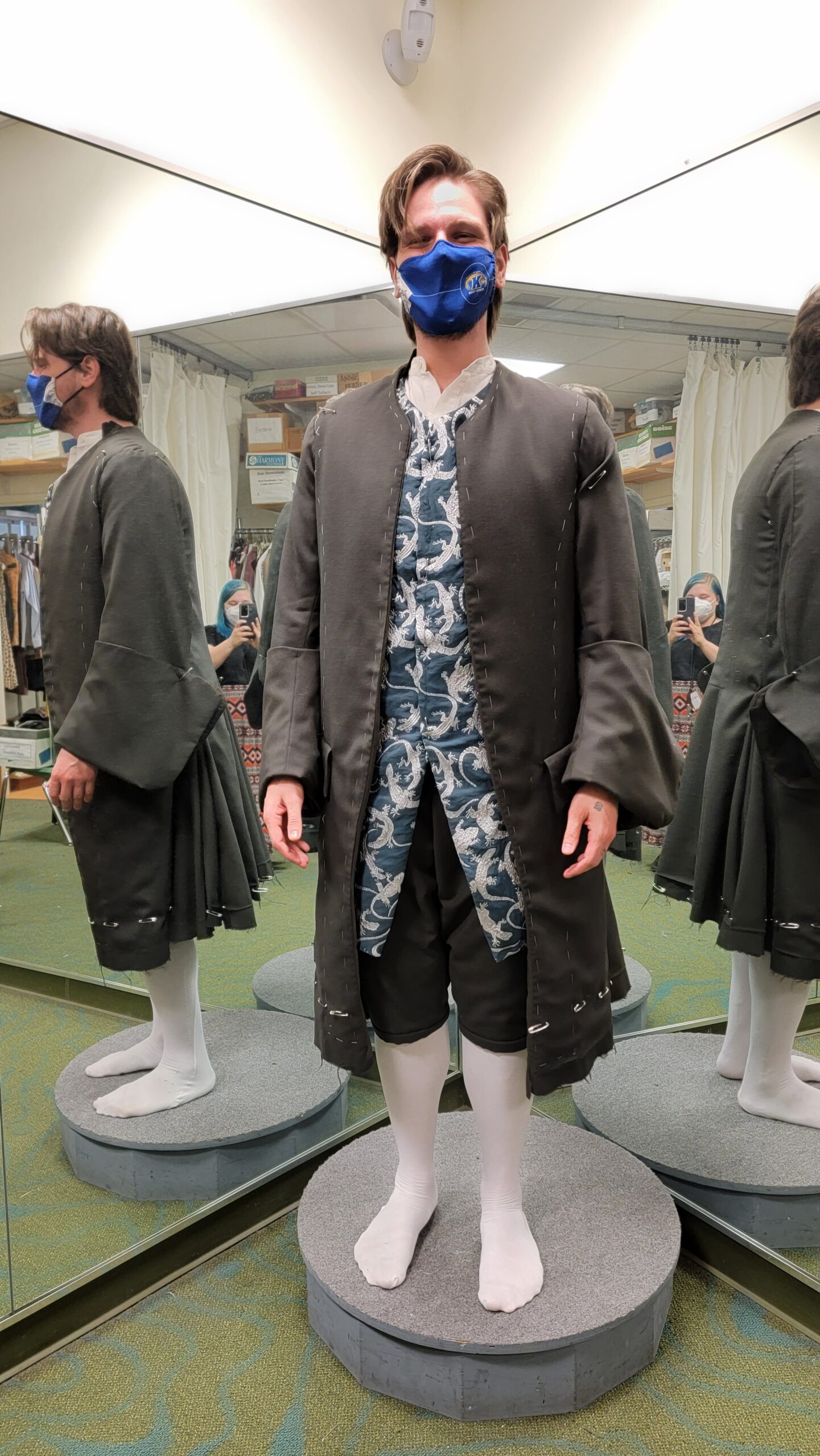
Tartuffe’s suit was drafted using the Sartor System, a theatrical drafting method, with the construction informed by museum research and period tailoring references. There were two challenges that arose from shopping for fabric online. First the lizard patterned brocade that was selected for its silver coloring in the listing online, arrived and was white with light silver lizards. I decided to dye the fabric to match, using a dye for natural fibers that mostly died the background fibers and only tinted the metallic lizards darker. Second the wool ordered for the coat was a looser weave than anticipated and arrived with less yardage than was ordered. With a limited timeline I decided to continue with the wool by flat lining with cotton and rolling out the yardage in the hallway to make use of every square inch. The jacket was constructed with traditional tailoring techniques including horsehair canvas, pad-stitched by hand, and double welt pockets set without a visible upper welt, consistent with 18th-century construction.